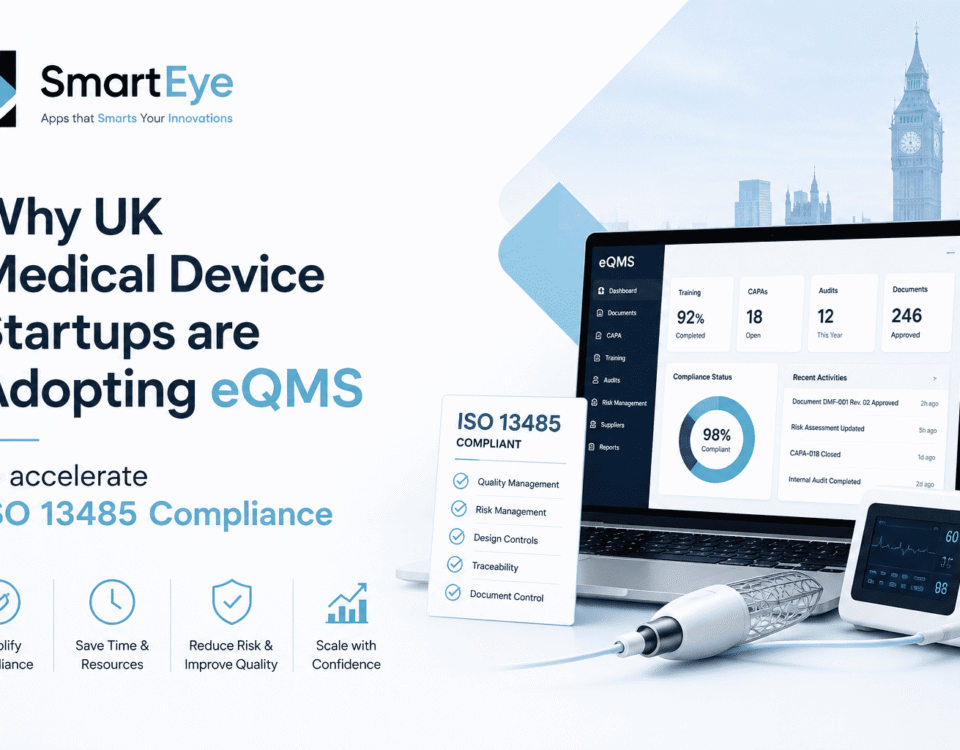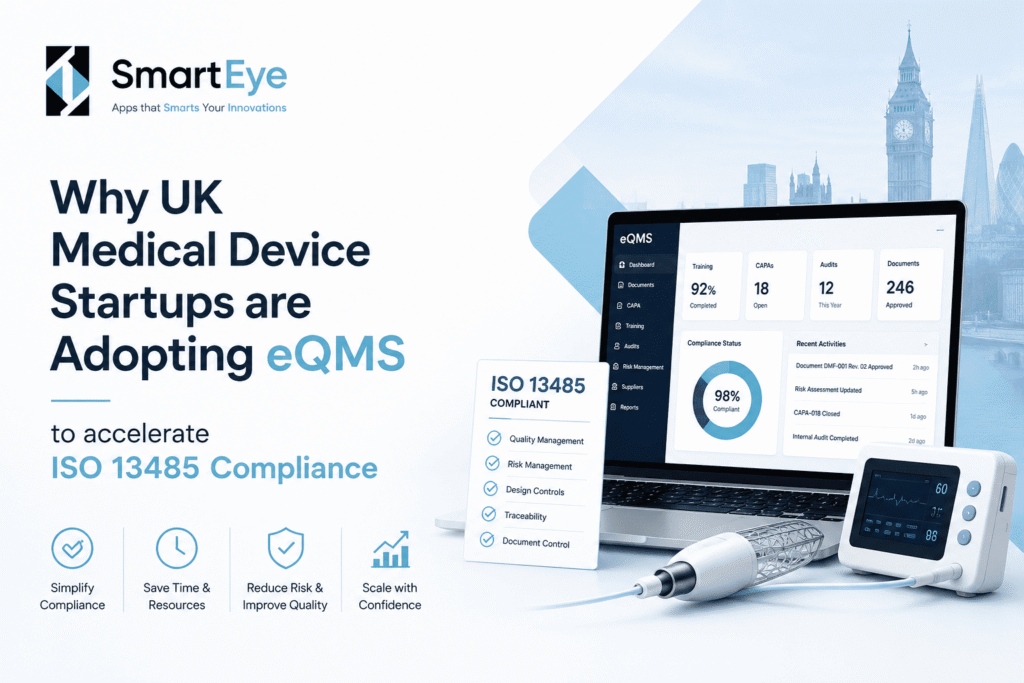

Why UK Medical Device Startups are Adopting eQMS to accelerate ISO 13485 Compliance
6 July 2026How an eQMS Simplifies ISO 13485 Compliance for UK Medical Device Startups
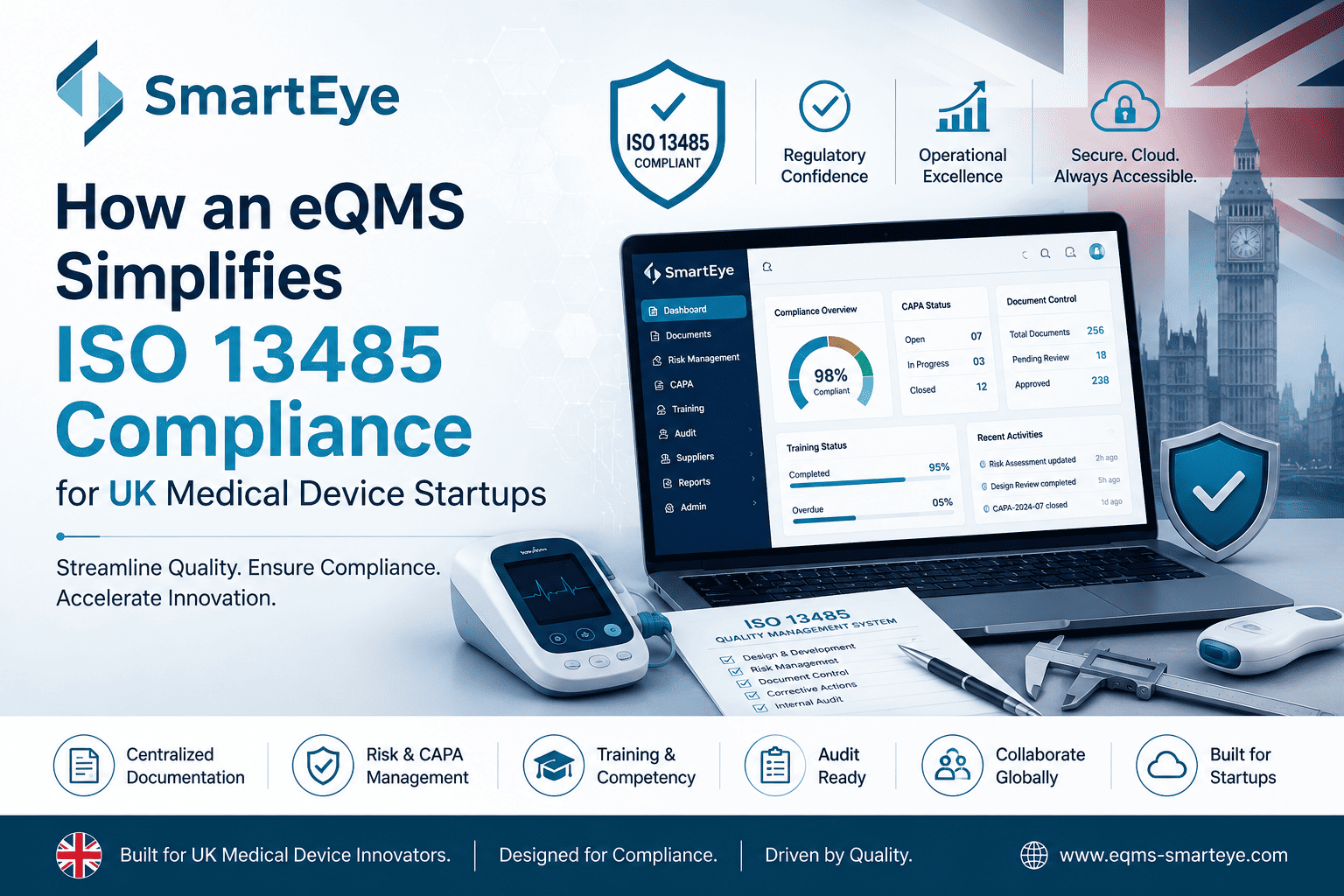
In this article, we'll explore how an eQMS simplifies ISO 13485 compliance for UK medical device companies and why adopting the right medical device eQMS software like SmartEye can accelerate your journey to certification.
Inroduction
For UK medical device startups, achieving ISO 13485 compliance is often one of the biggest challenges on the path to regulatory approval and market success. While the standard provides a framework for establishing a quality management system (QMS), implementing and maintaining compliance using spreadsheets, emails, and paper-based processes can quickly become overwhelming.
This is where an Electronic Quality Management System (eQMS) becomes invaluable. An eQMS automates quality processes, centralizes documentation, and provides complete traceability, helping startups meet ISO 13485 requirements efficiently while reducing compliance risks.
In this article, we'll explore how an eQMS simplifies ISO 13485 compliance for UK medical device companies and why adopting the right medical device QMS software can accelerate your journey to certification.
What Is ISO 13485?
ISO 13485 is the internationally recognized quality management standard specifically designed for medical device manufacturers and related organizations. It defines the requirements for establishing, implementing, and maintaining an effective Quality Management System (QMS) that ensures consistent product quality, regulatory compliance, and patient safety.
The standard outlines requirements for:
For UK medical device startups seeking access to the UK, European, and global markets, ISO 13485 certification is often essential for demonstrating regulatory compliance, ensuring product quality, and building trust with customers, notified bodies, and regulatory authorities.
Challenges Medical Device Startups Face with ISO 13485
Many startups begin their compliance journey using manual systems such as:
These approaches often create challenges such as:
What Is an eQMS?
An Electronic Quality Management System (eQMS) is a software platform designed to digitize and automate quality management processes.
A medical device eQMS typically includes:
By centralizing quality activities, an eQMS provides the structure required for ISO 13485 compliance.
1. Automated Document Control
ISO 13485 requires strict control over quality documentation.
An eQMS automatically:
This ensures employees always access the latest approved documents.
2. Simplified Design Control Management
Medical device startups must demonstrate design control throughout product development. An eQMS helps manage:
This creates complete traceability across the product lifecycle.
3. Integrated Risk Management
ISO 14971 risk management activities are closely linked with ISO 13485 requirements.
Modern eQMS platforms help teams:
This integration reduces compliance gaps and simplifies audits.
4. Efficient CAPA Management
Corrective and Preventive Actions (CAPA) are critical components of ISO 13485.
An eQMS automates:
Automated workflows ensure CAPAs are completed on time and properly documented.
5. Audit Readiness at All Times
Preparing for certification audits becomes significantly easier with an eQMS.
Auditors can quickly review:
Everything is stored in a centralized, searchable system.
6. Improved Training Compliance
ISO 13485 requires personnel to be adequately trained and competent.
An eQMS can:
This eliminates the administrative burden of manual training tracking.
7. Faster Regulatory Approval Preparation
Whether pursuing UKCA marking, CE marking, or FDA submissions, an eQMS helps maintain organized documentation required by regulators.
The result is:
This eliminates the administrative burden of manual training tracking.
Why UK Medical Device Startups Should Adopt an eQMS Early
Many startups delay implementing an eQMS until they prepare for certification.
However, early adoption offers significant advantages:
Reduced Rework
Quality processes are established from the beginning rather than being rebuilt later.
Scalable Growth
As teams expand, the eQMS provides consistent workflows and controls.
Investor Confidence
Investors increasingly evaluate quality systems and regulatory readiness before funding medical device startups.
Faster Time to Market
Efficient quality management supports quicker certification and product launch timelines.
Key Features to Look for in Medical Device eQMS Software
When selecting an eQMS for your startup, consider the following capabilities:
Choosing a system designed specifically for medical devices can significantly reduce implementation effort.
Conclusion
For UK medical device startups, ISO 13485 compliance does not need to be a complex, paper-heavy process. A modern eQMS streamlines quality management activities, automates workflows, improves traceability, and ensures organizations remain audit-ready throughout their growth journey.
By implementing an eQMS early, startups can accelerate certification efforts, reduce compliance risks, and focus more resources on innovation and product development.
If your organization is preparing for ISO 13485 certification, investing in the right medical device eQMS software can be one of the most valuable decisions you make.